

Navigating the Committee of Adjustment in Toronto (A Homeowner’s Guide)
If you’re planning a renovation, addition, or new build in Toronto and someone has mentioned the Committee of Adjustment, you’re probably wondering what that actually means for your project.
For many homeowners, this is the point where things start to feel confusing, and sometimes a little overwhelming.
The good news? You’re not stuck, and this is actually a very common part of the process.
At Acadia Drafting, we guide homeowners through Committee of Adjustment applications all the time. In this guide, we’ll walk you through exactly what it is, why you might need it, and how to navigate it with confidence.
Table Of Contents:
What Is the Committee of Adjustment?
Why You Might Need the Committee of Adjustment
What Is a “Minor Variance”?
Step-by-Step: The Committee of Adjustment Process
How Long Does the Process Take in Toronto?
Common Mistakes Homeowners Make
How to Improve Your Chances of Approval
How Acadia Drafting Helps
Is It Worth Going Through the Committee of Adjustment?
What Is the Committee of Adjustment?
The Committee of Adjustment is a local municipal body that reviews requests from homeowners and developers who want to move forward with a project that doesn’t fully meet current zoning bylaws.
In simple terms:
If your project doesn’t “fit the rules” exactly, this is the process that allows you to ask for permission to move forward anyway.
Rather than rejecting your plans outright, the city gives you the opportunity to present your case, and potentially get approved with some flexibility.
Why You Might Need the Committee of Adjustment
Most homeowners don’t plan to go through this process, it usually comes up during zoning review or permit application.
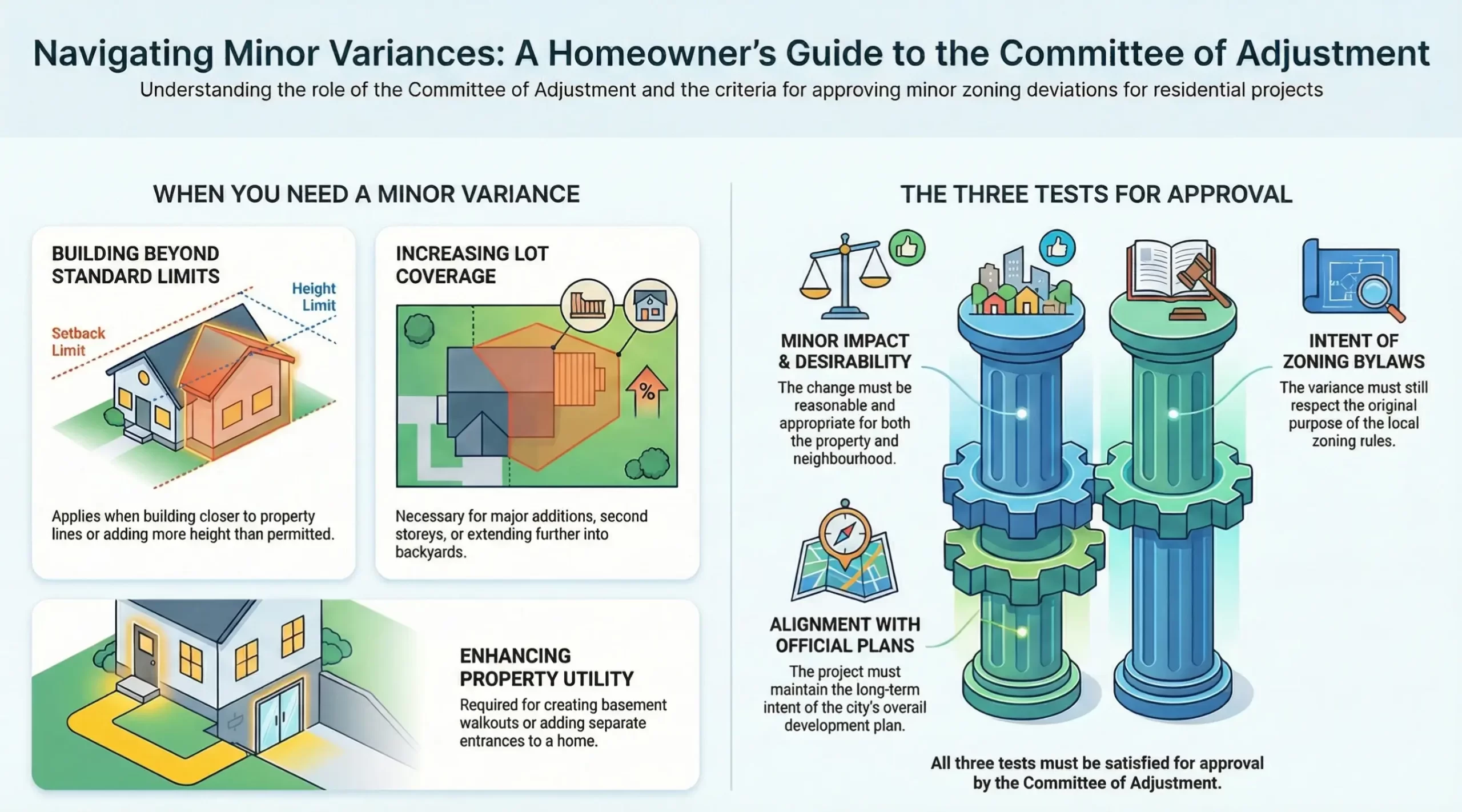
You may need a Committee of Adjustment approval if your project includes:
- Building slightly closer to a property line than allowed
- Adding more height than zoning permits
- Extending further into your backyard than permitted
- Increasing lot coverage (building takes up more space on your lot)
- Adding a second storey or major addition
- Creating a basement walkout or separate entrance
In many cases, this happens when homeowners are simply trying to make better use of their space.
And that’s important to understand, needing a variance doesn’t mean your project is unrealistic. It just means it needs approval through the proper channel.
What Is a “Minor Variance”?
A “minor variance” is the formal request you make to deviate slightly from zoning bylaws.
Despite the name, “minor” doesn’t always mean small, it means the change is considered reasonable and appropriate within the context of your property and neighbourhood.
To approve a variance, the Committee looks at four key factors:
- Is the change minor in impact?
- Is it desirable for the property and neighbourhood?
- Does it maintain the intent of the zoning bylaw?
- Does it maintain the intent of the city’s official plan?
Don’t worry, you’re not expected to interpret planning policy on your own. This is where having the right guidance makes a huge difference.
Step-by-Step: The Committee of Adjustment Process
Understanding the process makes everything feel much more manageable. Here’s what to expect:
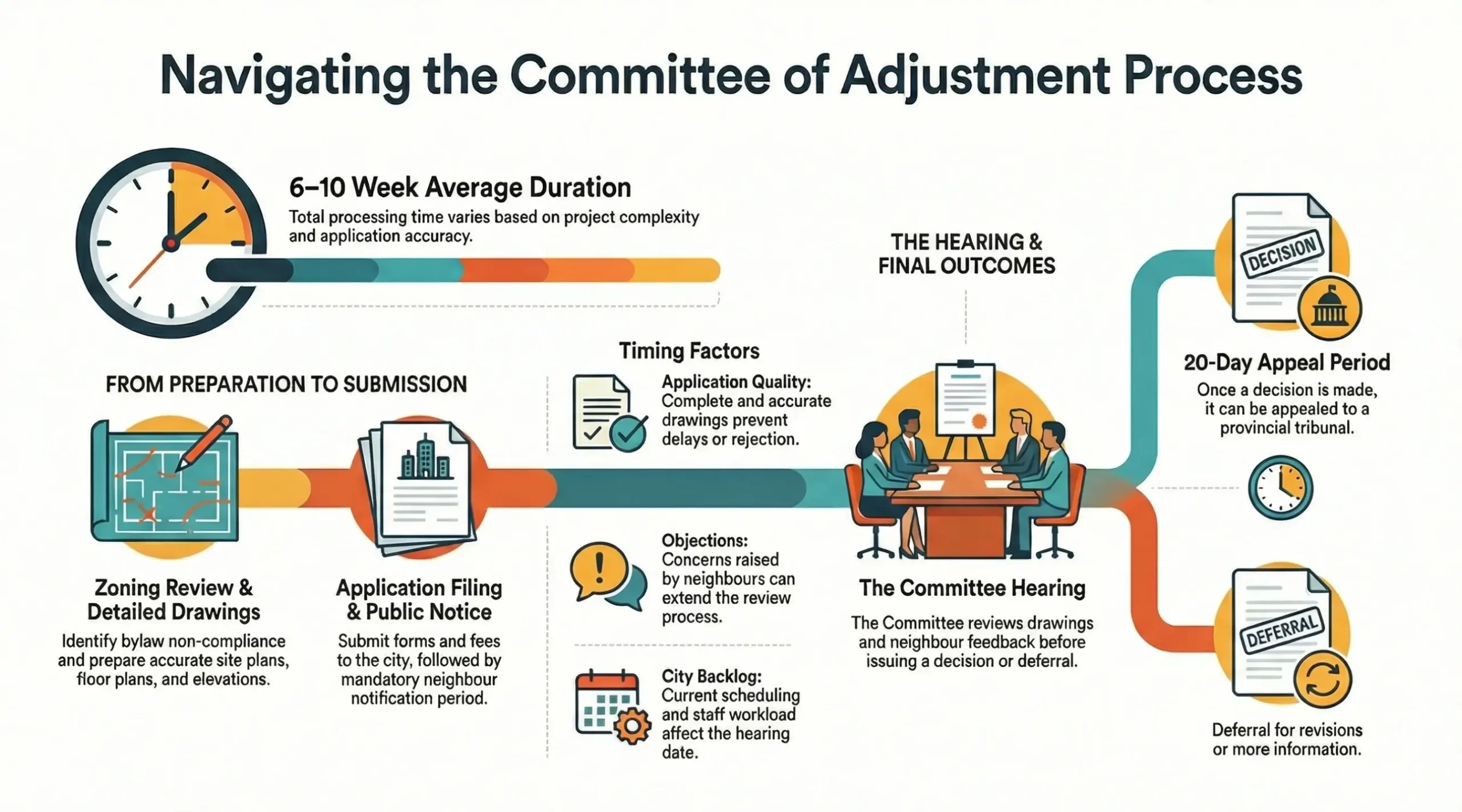
1. Zoning Review
This is where everything starts.
Your property and plans are reviewed against local zoning bylaws to identify what doesn’t comply.
At Acadia Drafting, we do this early, so there are no surprises later.
2. Preparing Drawings & Application
You’ll need detailed, accurate drawings that clearly show your proposal, including:
- Site plan
- Floor plans
- Elevations
- Supporting documents
This is one of the most important steps. Poor or unclear drawings can lead to delays or even rejection.
3. Submitting Your Application
Your application is submitted to the city along with the required forms and fees.
Once submitted, your file is scheduled for a hearing.
4. Public Notice & Neighbour Notification
The city will notify neighbouring properties about your application, and a notice sign is typically posted on your property.
This part can feel stressful, but in most cases, it’s simply part of the standard process.
5. The Hearing
At the hearing, your application is reviewed by the Committee.
They may:
- Ask questions
- Review your drawings
- Consider any feedback from neighbours
You (or your representative) may need to briefly explain the project.
6. Decision
After reviewing everything, the Committee will make a decision:
- Approved
- Approved with conditions
- Deferred (more information needed)
- Refused
7. Appeal Period
After a decision is made, there is typically a 20-day appeal period.
During this time, the decision can be appealed to a provincial tribunal.
How Long Does the Process Take in Toronto?
On average, the Committee of Adjustment process takes 6-10 weeks, but this can vary.
Factors that can affect timing include:
- The complexity of your project
- How complete and accurate your application is
- Whether there are objections or concerns raised
- City scheduling and backlog
A well-prepared application can make a significant difference in keeping things on track.
Common Mistakes Homeowners Make
This is where we see projects run into trouble.
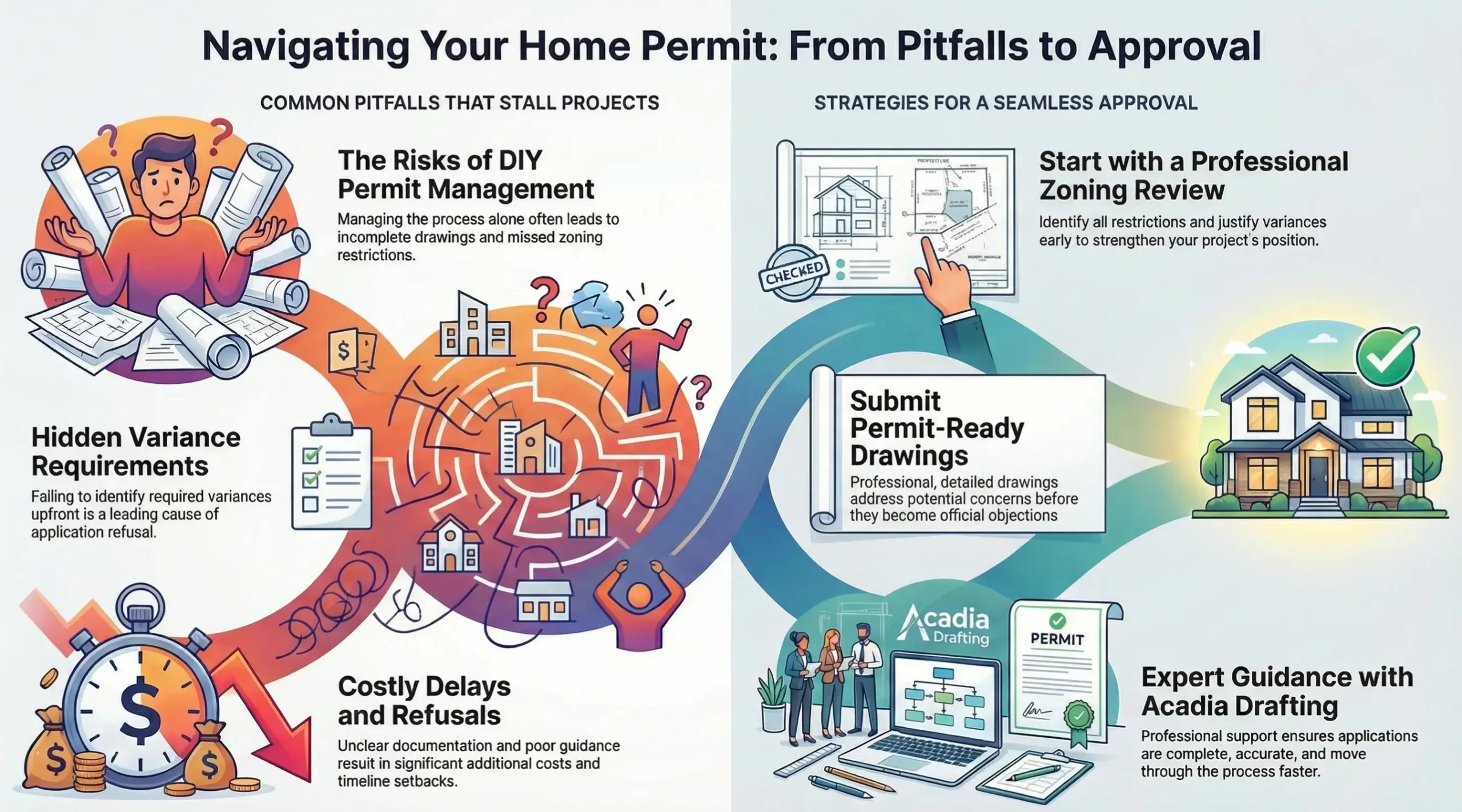
Some of the most common issues include:
- Submitting incomplete or unclear drawings
- Not identifying all required variances upfront
- Underestimating zoning restrictions
- Going into the process without proper guidance
- Trying to manage everything themselves
These mistakes can lead to delays, additional costs, or even a refusal.
How to Improve Your Chances of Approval
While no approval is ever guaranteed, there are ways to put yourself in a much stronger position:
- Start with a proper zoning review
- Ensure your drawings are clear and professional
- Keep variances reasonable and well-justified
- Provide a supporting rationale for your design
- Address potential concerns early
This is where experience really matters, knowing how to present your project can make all the difference.
How Acadia Drafting Helps
This is exactly where we support homeowners every day.
At Acadia Drafting, we don’t just create drawings, we help guide you through the entire process, including:
- Reviewing zoning and identifying required variances
- Preparing detailed, permit-ready drawings
- Ensuring your application is complete and accurate
- Helping you avoid delays and common mistakes
- Supporting you through each step of the process
Our goal is simple: To make the process smoother, faster, and far less stressful.
Is It Worth Going Through the Committee of Adjustment?
In many cases, yes, especially if your goal is to:
- Maximize your living space
- Improve your property value
- Build something that truly works for your needs
However, every project is different. Some proposals may require adjustments before moving forward.
That’s why it’s always a good idea to understand your options early.
2026 Toronto Committee of Adjustment fees and source links
Toronto updates Committee of Adjustment forms and fees, so check the official fee page before filing. For 2026, Toronto lists minor variance fees of $2,228.98 for additions and alterations to existing dwellings with three units or less, $5,011.08 for residential dwellings with three units or less, and $6,485.59 for all other residential, commercial, industrial or institutional uses. After-the-fact variances are double the regular fee.
- City of Toronto: Committee of Adjustment forms, submission guidelines and fees
- Acadia Drafting: Building permit drawings and submission support
Need help before submission? Acadia can review zoning comments, prepare variance-supporting drawings, coordinate revised plans and help you avoid filing a weak package.
FAQs
1. Do all projects require a Committee of Adjustment?
No, only projects that don’t fully comply with zoning bylaws need this process.
2. Can my neighbours stop my project?
Neighbours can share concerns, but the final decision is made by the Committee based on planning rules and merit.
3. What happens if my application is denied?
You may be able to revise your plans or appeal the decision, depending on the situation.
4. Can I apply without professional drawings?
Technically yes, but it significantly increases the risk of delays or rejection.
5. How much does it cost?
Costs vary depending on the project and the number of variances. It’s best to review your specific plans to get an accurate idea.
Need Help Navigating The Committee of Adjustment, Call Us Today!
The Committee of Adjustment might sound intimidating at first, but it’s really just a structured way to move forward with projects that need a bit of flexibility.
With the right approach and the right support, it can be a smooth and successful process.
If you’re planning a project and aren’t sure whether you’ll need a variance, we’re always happy to help.
At Acadia Drafting, we can review your plans, walk you through your options, and help you take the next step with confidence.