

Zoning Certificate vs Building Permit in Ontario: What's the Difference?
2026 Toronto ZAP and zoning fee examples
A Zoning Applicable Law Certificate application reviews a proposal for compliance with Toronto’s Zoning By-law and other applicable laws. The examples below are non-refundable 2026 fees listed by Toronto and should be checked before filing.
| Toronto zoning item | 2026 fee example | Use case |
|---|---|---|
| Accessory residential buildings and structures | $214.79 | Examples include garages, porches and balconies. |
| New laneway or garden suite | $644.38 | Used for many alternative dwelling unit proposals. |
| New house, additions, conversions and alterations to houses | $644.38 | Common residential ZAP category. |
| New buildings/additions/alterations other than a house, less than or equal to 300 m2 | $888.14 | Small non-house proposal category. |
| New buildings/additions/alterations other than a house, greater than 300 m2 | $1,863.82 | Larger non-house proposal category. |
| All other proposals | $214.79 | Examples include driveway widening, landscaping and pool fence enclosure. |
| Zoning Use Review | $214.79 | Review to confirm whether a requested use is permitted. |
Toronto also lists a Zoning Certificate fee equal to 25 per cent of the total prescribed building permit fee. Additional reviews after an examiner notice or voluntary minor changes can trigger a resubmission fee.
- City of Toronto: Building permit fees and ZAP fees
- City of Toronto: Preliminary zoning reviews, records and information
In this article
- The short answer
- What a zoning certificate actually proves
- What a building permit proves
- When you need a zoning certificate (and people forget)
- When you need a building permit
- What about minor variances?
- Mississauga and Vaughan: same idea, different paperwork
- The order that saves money
- Frequently asked questions
Confusion between a zoning certificate and a building permit comes up on almost every Toronto permit drawings project we take on. They sound similar, they cost money, they both involve city hall, and homeowners often think one replaces the other. They don’t. Here’s exactly what each document does, when you need one or both, and how to avoid wasting time pulling the wrong one for your project.
The short answer
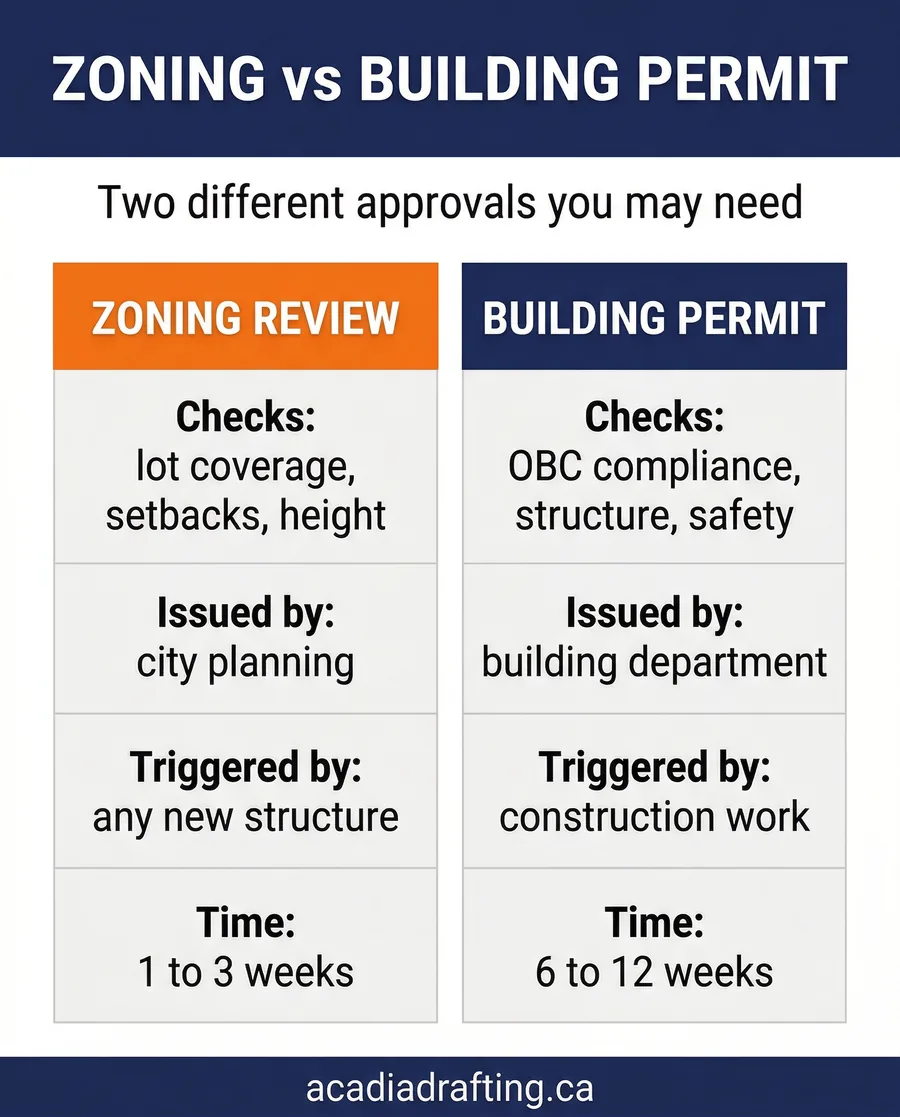
A zoning certificate is a written confirmation that your existing or proposed use complies with the local zoning bylaw. A building permit is permission to actually build something. Zoning certificates answer the question “is this allowed here?” Building permits answer the question “can I start construction?” Most renovation projects need a permit. Some projects also need a certificate first, especially if you’re changing how the building is used.
What a zoning certificate actually proves
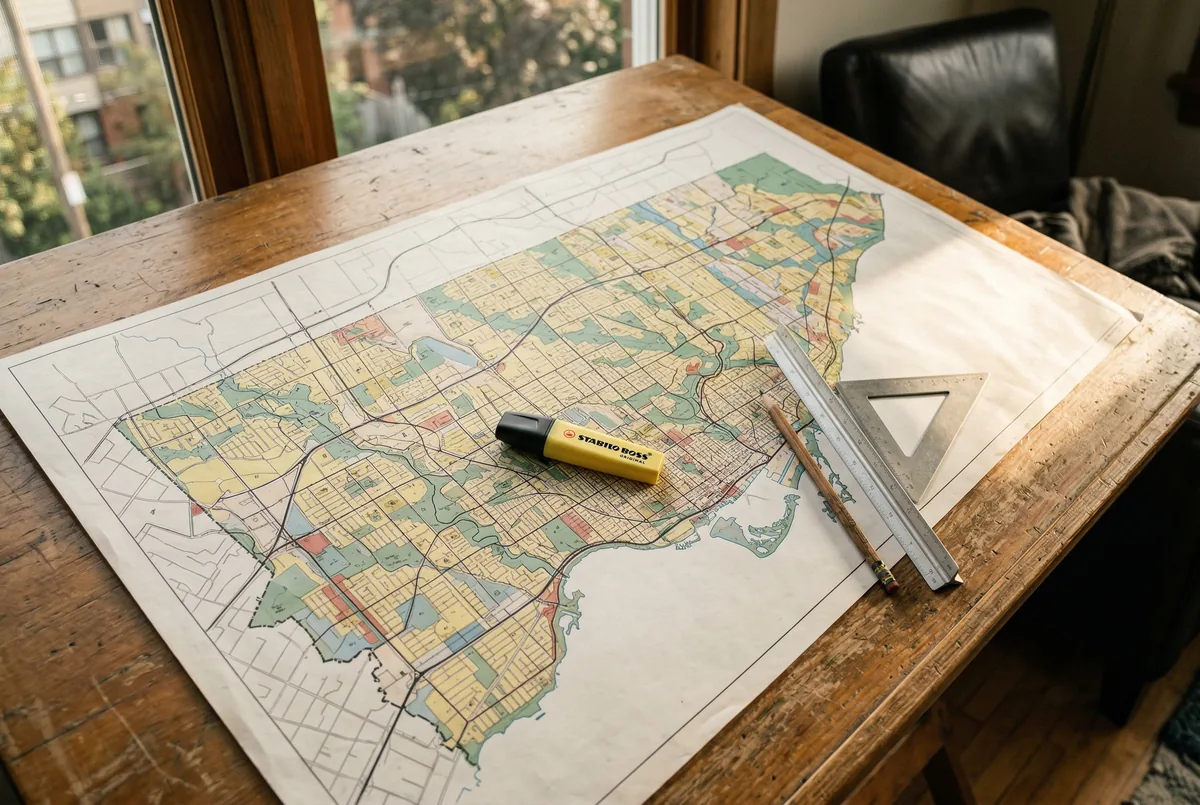
A zoning certificate (sometimes called a zoning compliance letter or zoning information report depending on the municipality) is issued by the planning or zoning department, not the building department. It confirms one or more of these for a specific property:
- Permitted uses under the current zoning
- Required setbacks, lot coverage, height limits, and floor area ratios
- Whether the existing building complies with current zoning or is legally non-conforming
- Whether a proposed use is allowed without a minor variance
- Number of permitted dwelling units
Lawyers ask for them during real estate closings. Lenders ask for them on commercial deals. Insurance underwriters ask for them on properties with grandfathered uses. And owners ask for them before designing an addition, because the Ontario Building Code cannot override a zoning rule. Zoning kills projects faster than building code.
What a building permit proves
A building permit is the construction approval. It says: your drawings comply with the building code, the structural design is sound, the energy efficiency requirements are met, and you may now build the project shown on the stamped drawings. Toronto Building issues these once the plans examiner is satisfied with the technical review. A permit is project-specific. A new project means a new permit.
When you need a zoning certificate (and people forget)
Most renovation projects don’t need a separate zoning certificate because the zoning compliance check happens automatically inside the building permit review. But there are situations where pulling a certificate first saves money and avoids surprises:
- Buying a house with a basement apartment. Confirm the second unit is legally registered before you close.
- Converting use. Single family to duplex, garage to office, basement to short-term rental. Certificate first, then permit.
- Heritage or non-conforming properties. Confirm what’s grandfathered before you touch anything.
- Commercial leases. Tenants need confirmation that their intended business is a permitted use.
- Major additions where lot coverage is tight. A certificate gives you a written number to design against.
When you need a building permit
You need a building permit for almost any work that changes the structure, the use, or the safety systems of a building. The list is long but the common ones include:
- Additions, second-storey builds, and addition permit drawings
- Structural alterations including load-bearing wall removal permits
- Basement underpinning and bench footing
- Finishing a basement that includes a new bedroom, bathroom, or kitchen (basement renovation permit drawings)
- Decks over 24 inches above grade
- Detached garages, sheds over 15 square metres, and accessory structures
- Window enlargements that change structural openings
- Most plumbing, HVAC, and electrical work (electrical also needs ESA)
What about minor variances?
If a zoning certificate or zoning review reveals that your design doesn’t comply, you have two options: redesign to fit the bylaw, or apply for a minor variance through the Toronto Committee of Adjustment. Minor variance hearings add three to four months to your project, plus application fees, plus appeal risk. We always design within zoning first when it’s possible, and only go to Committee of Adjustment when the project genuinely requires it.
Mississauga and Vaughan: same idea, different paperwork
The principles are identical across Ontario but every municipality has its own forms, fee schedules, and review timelines. City of Mississauga Building issues zoning compliance letters through their planning division. Vaughan Building Standards runs zoning verifications through Building Standards. We handle both routinely as part of our Mississauga permit drawings and Vaughan permit drawings services.
The order that saves money
- Zoning check or certificate first. Confirm what you can build before you draft anything.
- Concept design. Sketch the project against the zoning constraints.
- Structural and energy coordination. Lock in the engineering before final drawings.
- Building permit submission. Full drawing package, fees paid, application complete.
- Plans examiner review and revisions. Respond to comment letters within days, not weeks.
- Permit issuance and construction.
Save this as a PDF and keep it on hand for your project planning.
Frequently asked questions
Do I need a zoning certificate before I apply for a building permit?
In most Ontario municipalities you do not file a separate zoning certificate, but the building department runs a zoning compliance check as the first step of permit review. If your design fails that check, the permit application stalls until you fix it or get a minor variance.
What happens if my project does not meet zoning bylaws?
You either redesign to comply or apply to the Committee of Adjustment for a minor variance. A minor variance hearing adds three to four months to the schedule and is not guaranteed to be approved.
Can the city refuse a permit for zoning reasons even after the design is built?
Yes. Building inspectors can flag zoning non-compliance during framing or final inspections. Fixing it after the fact costs far more than catching it before drafting starts.
Is a zoning certificate the same as a survey?
No. A survey shows your lot lines and existing structures. A zoning compliance check measures your proposed design against bylaw rules. Most permit applications need both.