
Tel: (647) 478-9292 | Contact Us
May
06

Basement Finishing Permit in Ontario: Requirements and Process

  • Posted by: Anita S.
  • Date: 2026-05-06
  • In:  Permits
  • 0 comments
 

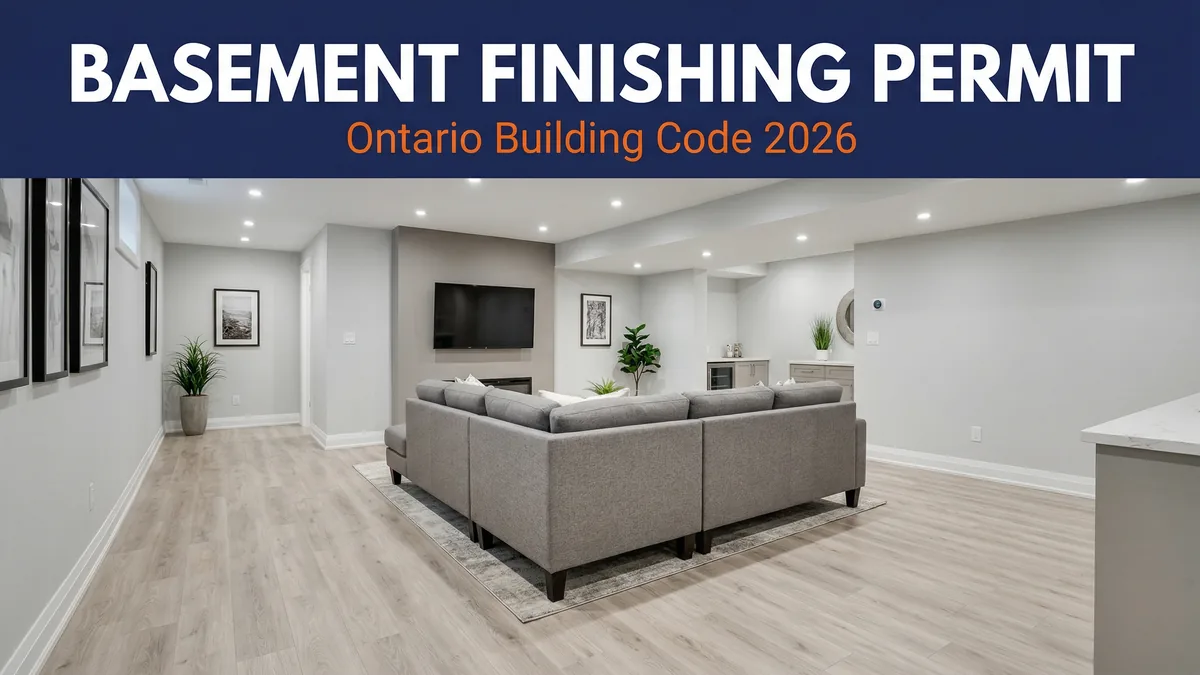
Finishing a basement is one of the most common projects we draft for homeowners across the GTA, and it’s also one of the most misunderstood when it comes to permits. The phrase “I’m just putting up some drywall” hides a long list of Ontario Building Code requirements that the city checks before issuing a permit and again at inspection. Here’s exactly when you need a permit, what the OBC actually requires in 2026, and the rejection reasons we see most often on basement renovation permit drawings projects.

Basement Finishing Permit in Ontario: Requirements and Process - Acadia Drafting
Basement Finishing Permit in Ontario: Requirements and Process

Do you actually need a permit?

Yes, in almost every case where finishing the basement involves any of the following:

  • Adding a bedroom (changes the egress and fire requirements)
  • Adding a bathroom or moving plumbing
  • Adding a kitchen or kitchenette
  • Creating a separate dwelling unit (legal second suite)
  • Building new partition walls
  • Modifying HVAC ductwork or adding new heat sources
  • Electrical work beyond replacing fixtures (separate ESA permit)
  • Enlarging or adding windows for egress

The exceptions are narrow. Painting, flooring, replacing trim, and swapping fixtures generally don’t require a permit. Almost everything else does. If your project is closer to an interior renovation permits than a paint job, plan on pulling a permit.

toronto permit rejections

What the Ontario Building Code requires for finished basements

Egress and bedroom windows

Every bedroom in a finished basement needs an egress window or door. The Ontario Building Code sets the minimum unobstructed openable area at 0.35 square metres with no dimension less than 380 mm, and the sill must be no more than 1.5 metres above the floor. Window wells must allow the window to fully open and provide enough room for an adult to climb out. This is the rule examiners flag most often, and undersized window openings are the single biggest cause of rejected basement permit drawings.

Ceiling height

The OBC allows a minimum finished ceiling height of 1.95 metres in basements (lower than the 2.1 metres required upstairs) but only over the required floor area. Beams, ducts, and bulkheads can drop to 1.85 metres in spots. If your existing basement is shorter, you’re either looking at basement renovation permit drawings with underpinning, or a project that won’t legally support sleeping rooms.

Fire separation

If you’re creating a second dwelling unit, the OBC requires a 30-minute or 45-minute fire separation between units depending on the configuration. That usually means Type X drywall on both sides of shared assemblies, and proper sealing of penetrations. Skipping this is a hard rejection at inspection.

Smoke and CO alarms

Interconnected smoke alarms on every level and inside every bedroom. CO alarms within 5 metres of every sleeping room. These are non-negotiable and inspectors check.

Stairs, handrails, and guards

Existing basement stairs that don’t meet current minimum width, riser, and tread dimensions are sometimes allowed under the existing building provisions of the OBC, but adding a second unit triggers a stricter compliance review. We assess this at the design stage so it doesn’t surprise anyone at inspection.

Ventilation and HRV

New bathrooms and kitchens need mechanical ventilation. New dwelling units need HRV (heat recovery ventilator) sizing under SB-12. Your HVAC contractor needs to provide a heat loss calculation that matches the drawings.

Plumbing and the floor drain

Basement bathrooms and laundries need a backwater valve in most Toronto homes. Water service sizing matters if you’re adding a second kitchen.

If you’re going beyond a finished basement and creating a registered second unit, the requirements jump significantly. Toronto and most GTA municipalities allow second units in detached, semi-detached, and rowhouse dwellings under zoning bylaw 569-2013 and similar 905-region bylaws, but they enforce the OBC’s second unit provisions strictly. Expect requirements for:

  • Sound transmission rating between units (STC 50)
  • Independent heating or zoned thermostats
  • Independent egress that doesn’t pass through the upper unit
  • Parking in some municipalities
  • Registration with the municipality after final inspection

Don’t try to legalize an existing illegal basement apartment without a designer who has done it before. The remediation list is long and the inspector will not skip items.

basement finishing permit Ontario infographic - Acadia Drafting
Basement Finishing Permit Checklist – infographic

The drawing package examiners expect

  • Site plan showing the property and the basement footprint
  • Existing and proposed basement floor plans
  • Reflected ceiling plan if there are bulkheads or dropped soffits
  • Section drawing showing ceiling height, floor assembly, and window heights
  • Window schedule with egress calculations
  • Wall and floor assembly details with fire ratings if applicable
  • HVAC layout with duct sizing
  • Plumbing schematic if fixtures are being added
  • SB-12 compliance form for the modified envelope
Basement Framing Inspection – What a building inspector might look for

Common rejection reasons in 2026

  1. Egress window calculation missing or undersized
  2. Bedroom located in a space without an egress window
  3. Ceiling height shown but not labelled
  4. Fire separation between units omitted or under-rated
  5. Smoke and CO alarm locations not shown
  6. Ventilation calculations missing
  7. No backwater valve shown
  8. Existing conditions not surveyed accurately, leading to comments about unrelated existing issues

The good news is every one of these is preventable at the drafting stage. The bad news is that once a file is rejected, the resubmission usually adds 4 to 6 weeks. If your project is already in trouble, we provide rejected permit help to get it back through review.

Download the free quick guide

Save this as a PDF and keep it on hand for your project planning.

Download: Basement Finishing Permit Checklist

historical building permit requirements

Frequently asked questions

Do I really need a permit to finish my basement?

Yes, if you are framing walls, adding bedrooms, running new electrical, adding plumbing, or installing a separate suite. Painting, flooring, and trim work alone are exempt. Anything beyond that requires a permit.

What is the minimum ceiling height for a finished basement in Ontario?

Under the Ontario Building Code, the minimum clear ceiling height is 1.95 metres for living spaces and 1.85 metres under beams and ducts. If your basement is shorter you need to underpin or bench the floor before the city will issue a permit.

Do I need an egress window in every basement bedroom?

Yes. Every bedroom requires a window with a minimum unobstructed opening of 0.35 sq m and a minimum dimension of 380 mm in any direction. The window must open from inside without tools.

Can I finish my basement without adding a second unit?

Yes, and the permit is simpler. A second unit triggers fire separation, sound transmission, separate egress, and ESA electrical permit requirements. A single-family basement permit skips most of those.

Start your basement project the right way

The cheapest basement project is the one that gets permitted on the first review, passes inspection on the first visit, and never has to be opened up to fix something the inspector flagged. request a free quote for your basement and we’ll handle the basement renovation permit drawings from site measurement through final inspection. We work across Toronto permit drawings, Mississauga permit drawings, Vaughan permit drawings, and the rest of the GTA.

Anita S.

Written by

Anita S.

Drafting and permit-process writer

Anita is a designer with deep specialization in Ontario Building Code compliance. She works on the trickier end of the residential permit spectrum: rejected permit reviews, code interpretation disputes, and projects involving sprinklered second units, fire separation, and existing building exemptions.

Who Our Clients Are:

Homeowners

Home renovations, additions, custom home builds and more. We help homeowners get their building permit fast with a complete set of drawings prepared in-house by our experts.

Commercial Property Owners

We work with restaurant owners, retail store owners, office managers and any other commercial owners to get their building permits approved fast and make their project reality.

Industrial Property Owners

We also specialize in working with all kinds of industrial properties, including distribution centres, warehouses and even grow houses that are sustainable and fully functional.

Contractors and Builders

We work with contractors and builders to ensure any project goes smoothly and the building permits get approved fast. We provide a full range of construction management services.