Building a new home is one of the most exciting projects you’ll ever take on, but the permit process can feel confusing, technical, and stressful if you don’t know where to start.
At Acadia Drafting, we specialize in new home building permits for homeowners across Toronto and the GTA. We translate complex zoning rules, Building Code requirements, and conservation authority approvals into a clear, step-by-step process, so your project moves forward legally, efficiently, and without costly delays.
You don’t need to be a builder or understand the Building Code – that’s our job! We are BCIN-Certified designers with over 15 years of experience drafting permits for new homes. Trust the team at Acadia for quick permit approvals so you can start the fun part – building your dream home!
Whether you’re planning a custom home, a teardown and rebuild, or a replacement home after a disaster, we make sure your plans are permit-ready from day one.
There is no single, guaranteed timeline for new home permits in Toronto, but most projects follow a predictable range depending on zoning compliance, site conditions, and application completeness.
While City review time is often blamed for delays, most permit slowdowns are caused before the application ever reaches a full review stage.
At Acadia Drafting, our permit-first approach focuses on reducing preventable delays by ensuring applications are complete, coordinated, and compliant from the start.
While every home is different, most new builds fall within a fairly predictable range once size and site conditions are known.
Toronto calculates building permit fees using a Service Index per square metre, plus a per-unit fee. For most new single-family homes, semis, townhouses, and duplexes:
In addition to City permit fees, homeowners should plan for the following project-related costs, which are commonly required for new homes:
Please note: These fees do NOT include Acadia Drafting’s service costs, these are specifically for the permit and other project fees.
Zoning bylaws are local planning rules set by each municipality that control what you are allowed to build on a specific piece of land. These rules are based on neighbourhood planning, density, safety, privacy, and infrastructure capacity.
For new homes, zoning typically controls:
Important: Zoning rules change by municipality, and even by neighbourhood. What’s allowed in Etobicoke may not be allowed in Markham or Oakville. Check the Toronto interactive map for zoning bylaws here.
At Acadia Drafting, we review zoning early so you don’t spend thousands on drawings that cannot be approved.
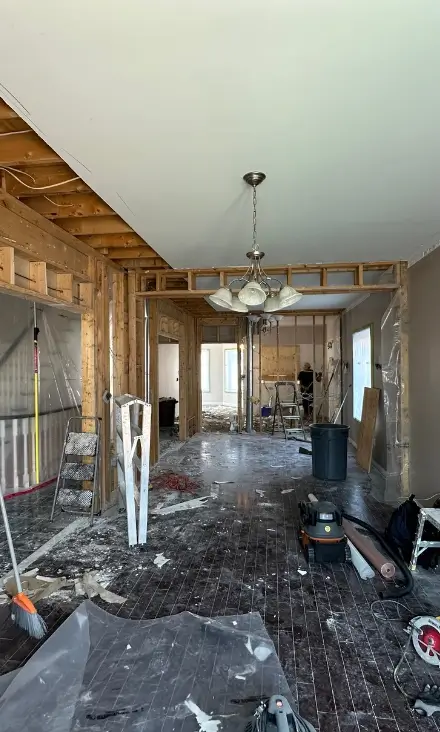
Once zoning feasibility is confirmed, the next step is preparing permit-ready drawings. Permit drawings are legal construction documents reviewed by municipal examiners and later used by building inspectors on-site. These drawings must clearly demonstrate how the home will be built, how it complies with zoning bylaws, and how it meets the Ontario Building Code.
Click to see a full list of Architectural Drawings that need to be included in your submission.
To be accepted for review, new home permit drawings must meet strict technical standards, including:
Permit drawings must be prepared by qualified professionals, such as:
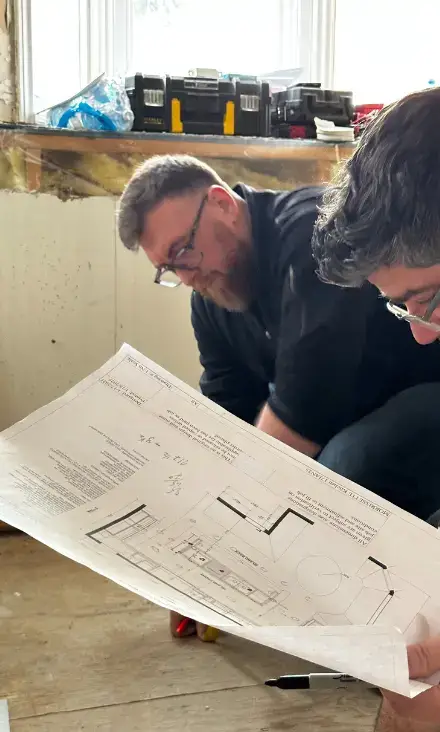
Once drawings and documents are complete, the permit application is submitted. For new homes in Toronto, all applications must be submitted through Toronto Building’s Online Services (email submissions are no longer accepted).
Once submitted, the City first performs a completeness check. If anything is missing, your application will be considered incomplete, and your project will go on hold.
At Acadia Drafting, we manage submissions carefully to ensure your application enters the review queue without delay.
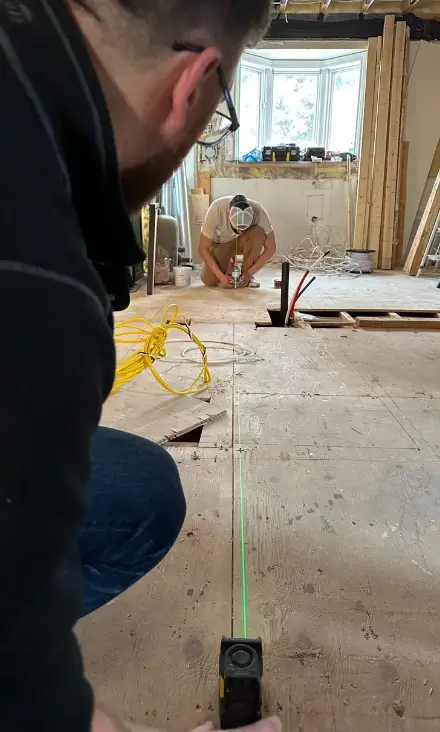
Once accepted, your application is reviewed by City examiners.
Examiners assess:
It is normal to receive review comments.
The City will issue a notice outlining:
This back-and-forth is a standard part of the process – the key is clear, coordinated responses, which prevent repeat comments and delays.
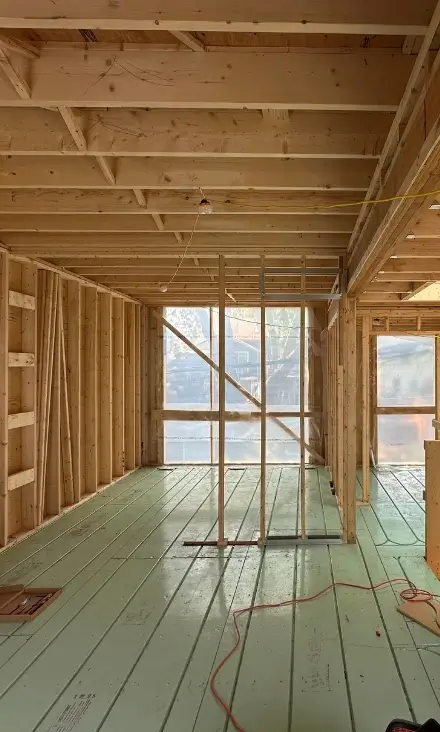
Once all comments are resolved, the City issues the building permit.
Important: A permit is not “finished” until all inspections are completed and the permit is closed.
Acadia Drafting can assist with open permits, help organize inspections and provide advice throughout your construction project.
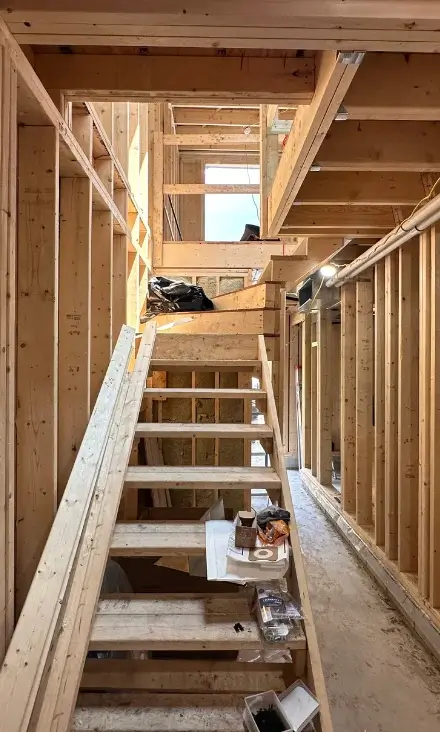
New home permit drawings are technical construction documents that must clearly demonstrate to the City how the home will be built, how it complies with zoning bylaws, and how it meets the Ontario Building Code.
Floor plans for every level, room uses and dimensions, window and door locations, stair layouts and headroom clearances & smoke and carbon monoxide detector locations.
Roof slopes, ridges, hips, and valleys, skylights and roof penetrations, truss or joist layouts (where applicable)
All sides of the house, exterior materials, window and door sizes, finished grade relationships & overall building height (critical for zoning)
Floor-to-floor heights, floor-to-ceiling heights, wall, floor, and roof assemblies & foundation details
Footings and foundation walls, structural framing above & load paths and connections
Property lines and dimensions, building footprint, setbacks to all lot lines & zoning compliance summary (height, coverage, GFA)
Proposed grading, drainage patterns & compliance with municipal lot grading criteria
Energy Efficiency Design Summary (SB-12 for Part 9 homes), prescriptive or performance compliance method
In addition to architectural drawings, new home permits require formal applications, declarations, and supporting documentation. These documents confirm responsibility, compliance, and coordination with other authorities.
This form legally initiates the permit process and establishes who is responsible for the work.
The City relies on the survey to confirm setbacks, lot coverage, and zoning compliance. Outdated or missing surveys will stop an application from moving forward.
The City requires confirmation that drawings were prepared by qualified designers under the Ontario Building Code. Property owners claiming exemptions must still complete this form.
This confirms which portions of the design are under professional engineering responsibility and ensures accountability for structural and specialty systems.
Energy compliance is an enforceable part of the Building Code and is verified during inspections.
These documents confirm that final grades were constructed as approved and protect neighbouring properties from drainage issues.
Tree protection and environmental bylaws are considered applicable law. Failure to address them can block permit issuance entirely.
These permits are linked to the main building permit and must be coordinated correctly during submission.
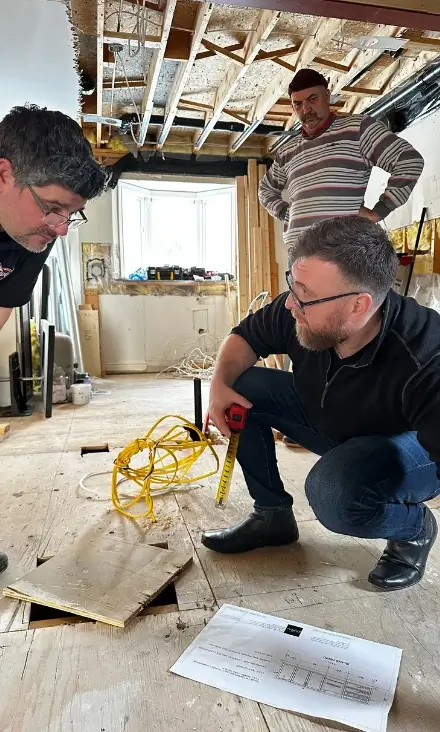
While relocating your laundry room to the second floor is incredibly convenient (and often necessary if you are adding a separate basement apartment), it requires careful structural planning. Washing machine vibrations can easily loosen subfloor nails, which leads to squeaky floors over time. For a safe and long-lasting installation, you must go beyond simply framing a closet. Plan to remove the flooring to properly reinforce the structure and install a dedicated floor drain to protect against potential flooding. If these structural upgrades cannot be safely implemented, it is highly recommended to leave your laundry room in the basement
| Delay Factor | Why It Matters | How to Reduce Risk |
|---|---|---|
| Zoning non-compliance | The design may exceed height, setbacks, coverage, or floor area limits |
Do zoning review before final design |
| Conservation/ravine/tree rules | Additional approvals may be required before permit issuance | Identify applicable law early |
| Engineering gaps | Structural/HVAC details may be missing | Coordinate consultants before submission |
| Grading/site servicing | Drainage and service connections can affect approval | Confirm grading and servicing needs early |
| Incomplete forms | Municipal review can stop before drawings are reviewed | Submit a complete application package |
We're happy to answer any questions you may have. Every project is unique, but here are some common questions that homeowners usually ask us.
In short, whether or not it will be cheaper for you to build a new house or remodel an old one will depend on the nature of your project. Generally, it is cheaper to remodel and renovate rather than build a new structure. This is simply because building requires more time, materials, permits and labour. Usually, less construction is involved in remodelling, which is why renovations are a cheaper solution (just to lay the foundation of a new home can cost as much as an entire renovation). However, a renovation project might end up costing you much more than expected if you have not prepared yourself and found the right design experts to plan and prepare drawings for your project before even starting to look for a contractor.
Furthermore, everything that does not involve altering more than 50% of your home is considered a renovation, so if the thought of having extra space or having a second bathroom occupies your mind, you can achieve that for much less money than you would by building a new home.
On the other hand, building from scratch allows you to customize your future home just the way you want it. Renovating or building an addition exactly the way you’ve imagined might not be possible at all times, mainly because of existing structures and the layout of your home. In order to make your project a success, you need to make sure you find a design consultant that knows how to lead your project without overspending.That means that your consultant must know all the municipal regulations that apply to your project, provide you with drawings that will help you get quick permit approval and ultimately lead construction and act in your best interest rather than the contractors’.
There are several factors that affect the cost of building a new home in Ontario, one of which is size. You will find that many contractors quote per square footage, but they usually don’t take other aspects into consideration. For example, they may quote you on building the structure, but won’t include the electrical or plumbing setup, which will end up costing you extra. To get a realistic quote for building a new house, talk to design experts who will quote you as per the drawings, not per square footage. That’s the only way that you’ll end up with a project that is delivered on time and within your budget.
You should be comfortable to spend on the design and think of it as an investment in order to get the right price for your new home. The right design consultant will know how much you should spend on every aspect of your project, which will help you get a fair price from contractors. You should be comfortable to spend on the design because doing so will give you the right price for your new home.
Whether or not you should build or buy a new property depends on what you’ve envisioned, as well as your budget. Generally speaking, when it comes to building vs. buying, there are two major groups of homeowners: those who want to completely customize and those who wish to upgrade but don’t have the budget for a full customization.
There are advantages and disadvantages to both sides. If you buy a house that has already been built, that means that you don’t have to deal with construction. Nevertheless, building a new home brings many customization options that you normally wouldn’t get when buying a pre-built home. Building a custom home means you get to choose how you want your home in great detail, but it does mean a lot of construction, which can be quite stressful. However, there is a way to avoid these headaches, and that is to hire a design expert who will provide you with drawings for every single aspect of your project, ensure your permits are approved on time, and act as your representative in all things construction.
This depends on the scope of your project and how much space you actually need. It also depends on the zoning bylaws in your area. An addition will certainly take less time and budget than building an entirely new home, but whether this is better for you depends on your individual needs. The two questions you should ask yourself, when deciding whether to build an addition or a new home, are:
1. How long will the project take?
A new house takes longer because it requires more infrastructural work. When you build an addition, you’re not changing the infrastructure, which means less permits and construction. Obviously, getting a permit for a new house can take much longer than an addition. Here are just some of the reasons why:
2. Will it be finished on time and within my budget?
If the project wasn’t properly planned, a new build (regardless if it’s an addition or a custom home), can take much more time and money than necessary. This usually happens when a contractor or a design professional fails to correctly determine the scope of the project by omitting important aspects. For example, hiring an architect who provides only structural drawings, but not electrical or HVAC drawings means that it will take longer for you to obtain a building permit since you have to go to different specialists for different drawings. The best way to ensure that your project is completed on time and within your budget is to speak to a design consultant who provides you with a complete set of drawings and knows the laws in depth. This is the only way to ensure that your permits are approved as quickly as possible and that construction is done right.
Yes, of course. You can buy a lot and start building whenever you want. The only thing you need to worry about is actually obtaining the permits for anything you want to build and making sure the drawings are approved. Obtaining a permit for a new home build can take a long time, which is why, if you’re looking for an empty lot to build on, you should try to find one that has all the permits in check and is ready to start construction. Another important thing to keep in mind when buying a lot to build on are the zoning bylaws. For example, if you buy a lot in an area with bungalows, there are clearly some height restrictions in place, and if you want to build a two-storey home in this neighbourhood, you might not be able to do that.
In order to find out what direction is best for you, you should always talk to an expert design consultant before you start. An experienced and knowledgeable consultant will study the bylaws before they even come to your lot and they will provide you with a quote and estimate only upon visiting the location. What we’ve learned throughout the many years of working with homeowners across Toronto and the GTA is that no two projects are the same, and every client has their own vision of how they want to customize their space. In order to fully make your vision a reality, you need a design consultant who is able to manage everything from drawings to construction under one roof.
There are several things you need to keep in mind when looking to build a new home:
No matter if your project is an addition, a custom home, or a renovation, you should always speak to an expert design consultant before talking to contractors. The right design consultant will potentially save you a ton of money on construction. Many people are eager to start their project as soon as possible, which is why they go to contractors before speaking to a design expert. This is a mistake because contractors usually provide quotes without knowing the actual scope of the project, and many of them will use cheap quality materials in the process.
Ask the right questions. Do you provide all building permit drawings in house? What kind of materials will be used? Will you manage construction in full?
These are just some of the questions you should ask a design consultant before you begin your project. The most successful projects are the ones where the client works together with the design consultant. Think of hiring a consultant as an investment rather than an expense. It is always better to invest more in doing your project right from the beginning than to spend much more money in the future on disputes, additional permits, adjustment committees and so on. An experienced consultant will know how to work in your best interest in order to protect you from contractors that overcharge or use cheap materials. Find a consultant that knows their way around construction to ensure that your project is done right.
The reason why Acadia Drafting has been so successful in all of our projects is because we have a lot of experience in all aspects of custom home building, including design, permit drawings and construction. We always protect our clients’ interests and ensure that only the best materials were used for the project.
There are several ways you can protect yourself against surprise fees when building a new house.
Be prepared to ask the right questions. Keep in mind that most surprise fees come from not being prepared. A design consultant can help you in avoiding unnecessary delays and fees, especially when it comes to construction. When you think about building a custom home, you have to think about every small detail of the project, including the materials that will be used, the drawings and permits, the size of the lot and everything else in between. Dealing with construction can be tricky, because there are many contractors who will use the cheapest materials and do the bare minimum for a ridiculous price. A design consultant will take these worries off your hands because they know what should and should not be used in construction, and they will always work to your benefit.
In order to find the best consultant, you should consider whether they can take on your project in full. That includes everything from construction, complete sets of permit drawings (including mechanical, hvac, electrical, architectural and all other engineering drafts), and design. Not having a complete set of drawings can delay the permit process and push your deadlines back.
At Acadia Drafting, we prepare ahead and we give our client our final quote right at the beginning of the project, but only upon finishing our site inspection. Unless our clients change their mind in terms of design, we do not charge a penny above our quote, because we come prepared with knowledge and experience to confidently determine the scope of the project right on the spot.
Zoning, conservation authority, ravine/tree rules, heritage, grading/site servicing, and minor variance requirements can delay a new house permit.
A current survey is often needed because zoning, setbacks, building location, lot dimensions, and site planning depend on accurate property information.
Yes. Acadia can help identify zoning conflicts and adjust the drawing package or coordinate the next approval step if a variance is required.












Home renovations, additions, custom home builds and more. We help homeowners get their building permit fast with a complete set of drawings prepared in-house by our experts.
We work with restaurant owners, retail store owners, office managers and any other commercial owners to get their building permits approved fast and make their project reality.
We also specialize in working with all kinds of industrial properties, including distribution centres, warehouses and even grow houses that are sustainable and fully functional.
We work with contractors and builders to ensure any project goes smoothly and the building permits get approved fast. We provide a full range of construction management services.