

When Do Homeowners Need an HVAC Permit in Toronto?
The furnace has been making a metallic rattle for two weeks, the estimate for a new one just landed on the counter, and buried in it is a question nobody explained: do you actually need an HVAC permit for a straightforward equipment swap in Toronto? For a lot of homeowners that question shows up in the middle of an emergency, which is a rough time to start reading permit guidelines from scratch. If a contractor is quoting new equipment for your home, our mechanical and HVAC permit drawing service is built around exactly this question, matching the drawings to what the work actually involves before anyone applies for anything.
An HVAC permit is not really about whether you hired a good contractor. It is about making sure whatever gets installed, moved, or resized gets checked against the same kind of drawings a building department asks for on any other mechanical change. Here is what commonly puts HVAC work in front of a permit reviewer, what tends to slip past that review, and how to check your specific situation before anyone signs a contract.
Does replacing a furnace or AC need a permit?
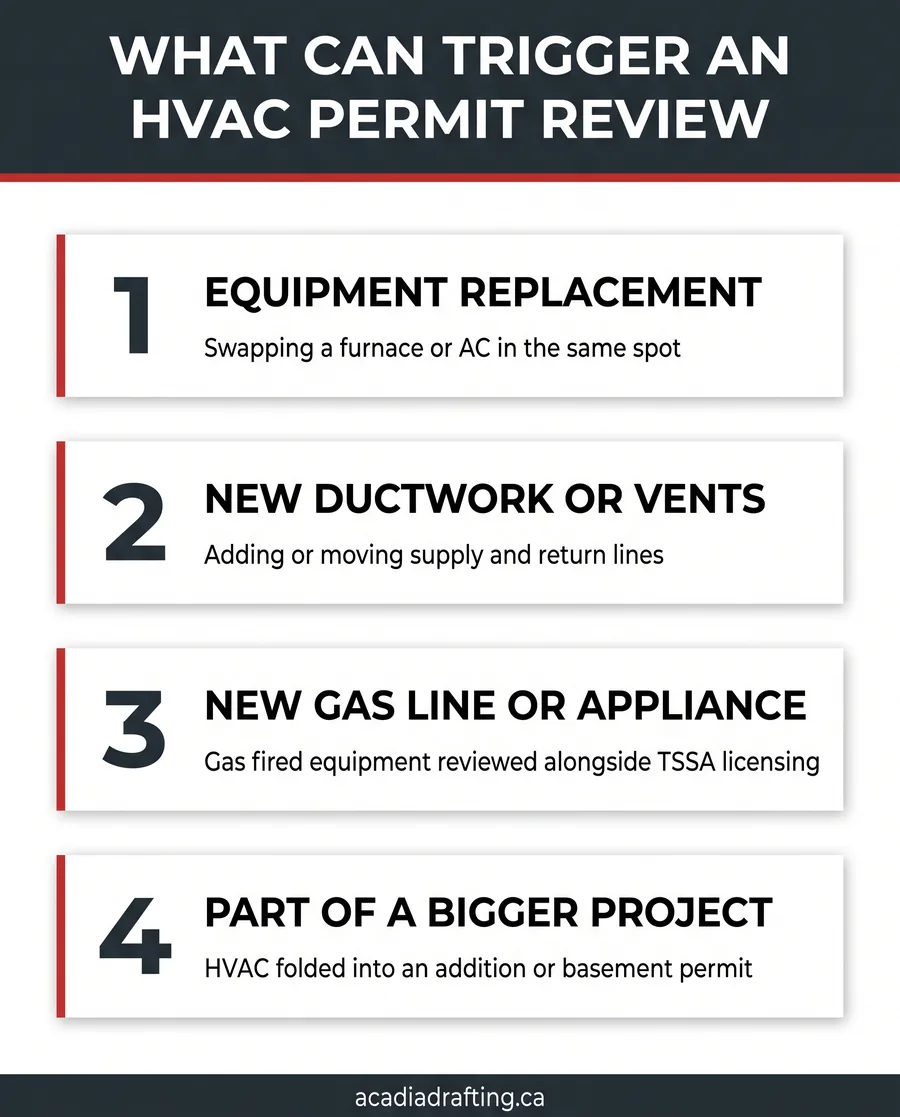
In practice, replacing a furnace or air conditioner with an equivalent unit in the same spot is one of the situations that commonly lands in front of a mechanical permit reviewer in Toronto. The equipment itself might look like a simple swap, but a permit application checks details like venting, clearances, and how the new unit ties into the existing gas or electrical connection. the City of Toronto’s own building permit guidance is worth a look before you assume otherwise, since it outlines which categories of work commonly get a closer look.

What if you are just adding air conditioning?
Installing air conditioning where there was none before is a different situation than swapping equipment, because it usually means new refrigerant lines, an outdoor condenser in a location that did not have one, and sometimes an added electrical circuit. All of that tends to draw more attention during a permit review than an equivalent replacement does, simply because more is changing at once.
People often ask
Do you need an HVAC permit just for a window air conditioner? A portable or window unit plugged into an existing outlet is a different category from central air with new lines and a permanent outdoor unit, and it rarely raises the same questions. Once equipment ties into ductwork, refrigerant lines, or a new electrical circuit, that is when it is worth asking the question directly rather than assuming either way.
Does new ductwork or moved equipment change things?
Moving supply and return vents, adding a branch of ductwork, or relocating the furnace or air handler to a different room usually shifts a project from a like for like swap into something that gets a closer look. Airflow, clearances around combustion equipment, and how the new layout ties into the rest of the house all become part of what a reviewer is checking, alongside the equipment specs themselves.
Did you know
Moving a furnace even a few feet within the same mechanical room can change the clearances expected around it, since clearance guidance is based on the equipment’s position relative to walls, combustibles, and combustion air, not just the model of furnace.
Do gas fired systems add a TSSA layer?
Furnaces, gas fireplaces, and other gas fired equipment typically bring in a second layer beyond the municipal building permit. In Ontario, gas work is generally handled by a contractor holding the right TSSA credential, and TSSA’s licensed gas contractor listings is a useful way to confirm that credential before work starts, separate from whatever the building permit itself reviews.
The building permit and the gas credential answer two different questions: one is whether the change to the house has been reviewed, the other is whether the person doing the gas work is licensed to do it. Both matter, and neither one substitutes for the other, and neither one tells you on its own whether you need an HVAC permit for the mechanical side of the job.

What if the HVAC work is part of a bigger project?
HVAC changes rarely happen in isolation once a basement finish, an addition, or a full mechanical room relocation is involved. In that case, the mechanical scope typically gets folded into the same permit application as the rest of the project rather than reviewed on its own. Our basement renovation permit drawings work often includes exactly this kind of coordination, matching the new mechanical layout to the drawings for the rest of the space, so nobody has to figure out separately whether the mechanical portion needs an HVAC permit of its own.
Working from the drawing set most reviewers expect for a bigger project usually includes a mechanical layout alongside the architectural drawings, so a reviewer can see how the equipment fits with everything else changing in the same space.
How do you find out if you need an HVAC permit?
The most reliable path is asking before the contractor orders equipment, not after. A quick description of what is changing, the current equipment location, the new location if any, and whether ductwork or gas lines move, is usually enough for a first read on whether a permit applies. how long a Toronto permit review typically takes is worth knowing too, since that shapes when equipment should actually be ordered.
Cost is the other piece people want settled early. what a GTA permit application typically involves varies by project type and scope, so a specific number is worth getting from whoever is preparing your application rather than guessing from an average.
Good to know
This article describes situations that commonly bring HVAC work into a permit review, not a determination for your specific project. Ontario municipalities, including Toronto, each apply their own process to a given scope of work, and the only way to know for certain is describing your project to the building division or to whoever is preparing your permit drawings before equipment is ordered.
Download the free quick guide
A printable one-pager: what commonly triggers a permit review, and the questions worth asking before you sign a contract.
Frequently asked questions
Does a straightforward furnace replacement need an HVAC permit in Toronto?
In practice, swapping a furnace or air conditioner for an equivalent unit in the same location is one of the situations a mechanical permit review commonly covers, since the reviewer is checking venting, clearances, and how the new unit connects to the existing gas or electrical service. It is not automatic for every scenario, and the only way to know for certain is describing the specific equipment change, old and new, to whoever is preparing the permit application before the contractor orders anything.
What about adding central air where there was none before?
Adding central air usually involves more than the equipment itself: new refrigerant lines, an outdoor condenser in a location that did not have one, and sometimes a dedicated electrical circuit. Because more is changing at once compared with a like for like swap, this situation tends to draw a closer look during a permit review. Confirming the scope early, before equipment is ordered, generally moves faster through review than sorting it out afterward.
Does electrical or gas work factor into an HVAC permit, or is it separate?
They are typically reviewed on separate tracks. The building permit looks at how the mechanical change fits the house, while gas work is generally handled by a contractor holding the right TSSA credential, and electrical work often falls under its own inspection process. A single HVAC project can touch all three at once, which is exactly why it helps to ask early which pieces apply to your specific scope rather than assuming only one does.
Who usually handles the permit application, the contractor or the homeowner?
It varies by project and by contractor. Some HVAC contractors prepare and submit straightforward mechanical permit applications themselves, while others focus on the installation and leave the drawings and application to a separate drafting service, particularly once the project involves ductwork changes or ties into a bigger renovation. Either way, it is worth confirming in writing, before work starts, who is actually responsible for getting the permit in place.
What happens if HVAC work goes ahead without checking first?
Outcomes vary by municipality and by how the work is eventually discovered, so there is no single answer that applies everywhere. What is consistent is that sorting out a permit after equipment is already installed tends to take longer and involve more back and forth than checking beforehand, since a reviewer may ask to see or confirm details that are easier to document before walls and ductwork are closed up.
Here is the honest version: if you are staring at a furnace quote right now trying to decide whether you need an HVAC permit, you are not wrong to pause and ask. It takes one phone call or one email to settle it, and that is a lot cheaper than finding out after the equipment is already sitting in your basement. If you want that answered properly, request a drafting quote for your project and we will tell you plainly whether your specific scope needs a permit application and what drawings it would take.